
Friday, October 17, 2025
The demand for rental housing in Calgary continues to soar, making the basement suite one of the city’s most powerful investment tools. The economic reality is clear: converting an unused or under-utilized basement into a high-quality rental unit significantly contributes to passive income and overall home value. But for countless homeowners, that “suite” sitting below grade is merely a functional space—a kitchen, a bathroom, and a few bedrooms—that is not recognized by the City of Calgary as a legal dwelling. This lack of compliance poses significant risks to your finances, your insurance, and your family’s safety. If the city or a tenant reports the uncertified suite, you could face hefty fines and forced, immediate removal of the kitchen, shutting down your income source overnight.
Renovating a secondary suite in Calgary is a project with a dual mandate: first, it must achieve legal compliance and life safety standards; second, it must deliver a strong Return on Investment (ROI). The good news is that these two goals are intrinsically linked. Achieving legal certification is the single most effective way to de-risk your asset, protect yourself from liability, and command a premium rental rate, directly increasing your home’s equity. This transition from “unauthorized unit” to “legal asset” is the most valuable part of the entire renovation.
This comprehensive guide is dedicated to providing Calgary homeowners with the full roadmap for turning a functional basement space into a safe, legal, high-value income property. We will detail the mandatory renovations required by the City, the hidden structural costs unique to older Calgary homes, and the critical design upgrades that ensure you maximize your rental income and minimize maintenance headaches.
I. Mandatory Compliance Renovations: The “Life Safety” Foundation
The most crucial portion of your budget must be allocated to meeting the Alberta Building Code (ABC) and the City of Calgary Land Use Bylaw requirements. These are not cosmetic suggestions; they are non-negotiable legal requirements designed to protect human life. These items must be budgeted first, as they are essential for obtaining your permit and, ultimately, your final certification and insurance coverage. Expect structural and life-safety upgrades to consume roughly 40-50% of your total budget.
A. Egress Windows: The Emergency Escape Renovation
The number one renovation hurdle for older Calgary basement suites is egress (emergency exit). The code strictly mandates that every bedroom in a legal secondary suite must have a window that meets specific size requirements to ensure a person can escape in a fire, and that firefighters can enter.
Specific Egress Dimensions and Positioning
The window must have an unobstructed opening of at least 0.35 square meters (3.77 sq. ft.) with no dimension (width or height) measuring less than 380 mm (15 inches). Furthermore, the distance from the floor to the bottom of the window well must not exceed 1.5 meters (5 feet). If the sill height exceeds this, a permanently fixed ladder must be installed within the window well. This rule is absolute, meaning even if your existing window is 14 inches wide, it fails compliance, requiring a full replacement.
The Structural Work Required: Cutting the Foundation
For most homes built before 1990, the existing basement windows are too small and too high. Correcting this involves a major structural renovation:
- Foundation Cutting: A specialized contractor must precisely cut through the concrete foundation wall using a diamond-blade wet saw to enlarge the window opening. This requires a structural engineer’s detailed plan and a building permit to ensure the structural integrity of your home is maintained. The contractor must install a new steel or engineered wood lintel (beam) above the new opening to carry the load of the house above. This is a messy, expensive, and technical job.
- Addressing Head Clearance: In many older homes, the basement ceiling height is already low. The code requires adequate head clearance, so often the contractor must also cut down and remove a portion of the concrete floor slab (the rough-in cut) below the window to ensure the required sill height from the floor is met. This adds complexity and cost to the excavation phase.
- Installing Window Wells and Drainage: Outside the newly cut opening, you must install a compliant window well. The well must be large enough to allow the window to open fully and provide a clear, unobstructed path to escape. Crucially, the well must be designed with proper drainage, often by connecting directly to the exterior weeping tile system, to prevent hydrostatic pressure and water intrusion into the basement, especially during heavy Calgary rainfalls or spring thaws. This single renovation often consumes 15–20% of a total basement renovation budget, but it is entirely non-negotiable for legal status.
B. Fire Separation: The Critical 30-Minute Barrier
The primary purpose of fire separation is to create a physical, minimum 30-minute barrier between the two units, allowing occupants time to evacuate safely. This is where most uncertified suites fail inspection due to poor or incomplete separation.
The Required Assembly and Fire Stopping
The renovation involves installing 5/8″ Type X Fire-Rated Drywall on the ceiling of the suite (the floor joists separating the basement from the main floor). The renovation is only compliant if the drywall runs continuously to the structural elements, and if all joints and edges are properly mudded and taped. A common mistake is failing to use proper fire stopping material—specialized fire-rated foam or caulk—to seal the gaps where the drywall meets the top and bottom plates of the wall. These tiny gaps can allow smoke and flame to bypass the barrier in a fire.
The Unseen Costs: Penetration Sealing and Utility Rooms
- Junction Boxes: All electrical boxes recessed into the fire-rated ceiling must be sealed using fire-rated putty pads or specific fire-rated enclosures. Any can lights must be fire-rated and sealed.
- Pipes and Ducts: Every gap around plumbing pipes, gas lines, or heating ducts that passes through the ceiling must be sealed with a specialized fire-rated acoustic sealant or caulk to ensure the integrity of the barrier.
- The Utility Room: The furnace and hot water tank must be enclosed in their own, fully fire-separated utility room with a fire-rated door and frame. This room cannot be directly accessed from the suite itself and must be fully compliant with its own ventilation and access requirements.
C. Interconnected Smoke/CO Alarms: Immediate Warning
The legal requirement is that the secondary suite and the primary unit must have interconnected alarms. This means if a fire starts in the suite, the alarms in the main house must sound instantly, and vice versa.
The renovation requires replacing all existing, battery-only alarms with hardwired, interconnected alarms. This involves electrical work to wire the units together, ensuring they communicate, and often requires a dedicated circuit run from the main panel. This ensures that the earliest sign of smoke or CO in one dwelling provides the entire home with a crucial head start for evacuation, fulfilling the core principle of life safety.
II. Financial and Utility Renovations: Maximizing Net Income
Once the suite is safe and legal, these utility and systems renovations protect your cash flow, increase efficiency, and make the suite more appealing to high-quality tenants by shifting operating costs to them.
A. Utility Separation vs. Sub-Metering: Tracking Consumption
One of the largest ongoing headaches for landlords is managing utility costs, leading to disputes over usage. If you include utilities in the rent, you lose control over consumption. The highest ROI solution is to achieve utility independence.
- The Gold Standard: Separate Meters: The ideal renovation is to install separate electrical panels/meters (and separate gas meters, if applicable). This involves coordinating with Enmax or your local utility provider, a process that can take months and cost thousands (often $5,000 to $15,000+ depending on the complexity of the service connection). While the upfront cost is significant, it guarantees that the tenant pays their own usage, eliminating utility disputes and securing the highest possible ROI over the long term.
- The Practical Alternative: Sub-Metering: If separate utility service is prohibitively expensive, you must install sub-meters on the secondary suite’s electrical and water lines. These sub-meters are not used for direct billing by the utility company, but they allow you to accurately measure the tenant’s usage and bill them accordingly, protecting your bottom line and promoting conservation.
B. Heating System Upgrades: The Comfort Factor and Efficiency
Calgary winters demand an efficient and comfortable heating system, and tenants expect control. Relying on the main house’s outdated furnace to efficiently heat the basement can be difficult and lead to thermostat wars and high energy bills.
- Zoning: The minimal upgrade is to install a separate thermostat for the basement (if running off a central furnace), allowing the suite to function as its own heat zone. This requires careful adjustment of ducts and dampers.
- The Premium Solution: Mini-Split Systems: The highest ROI heating renovation is converting to an independent system like a ductless mini-split heat pump system. A mini-split unit offers two major advantages: dedicated, highly efficient heating and, critically, air conditioning (a major rental draw in Calgary’s increasingly hot summers). This renovation allows the tenant full control over their environment, significantly increasing rental appeal and value, and allowing you to confidently ask for a premium rental rate.
C. Plumbing Integrity: Backflow and Drain Health
Older homes in Calgary, particularly those built before the 1980s, often have original plumbing that is a ticking time bomb for sewage issues. Addressing these structurally is crucial before closing up the walls.
- Backflow Prevention Valve: The City of Calgary mandates the installation of a backflow prevention valve on the main water line (often near the main water meter). This is required to protect the main municipal water supply from contamination and is a mandatory item for final inspection.
- Drain Health Check and Remediation: During the renovation, pay for a CCTV pipe inspection to assess the condition of your cast iron or clay drain pipes. These pipes are prone to cracking, tree root intrusion, and collapses. If the main stack (the large vertical waste pipe) is made of old cast iron, it is strongly recommended to replace it with modern PVC. While this requires opening up walls and potentially jackhammering the floor slab to reach the lower sewer line, it is an essential structural renovation that prevents catastrophic sewage backups, which are financially ruinous for any landlord. The cost of this trenching and replacement can be high but eliminates a major liability.
IV. Cosmetic and Durability Upgrades: The Premium Rental Rate
After safety and compliance are locked in, these design choices will dictate your rent ceiling. These items significantly boost tenant appeal, reduce turnover, and allow you to charge top-of-market rent.
A. Flooring Selection and Moisture Mitigation
Basement floors are constantly exposed to moisture fluctuations and cold temperatures. Your renovation must prioritize durability and moisture resistance, not just the finished look.
- Dimpled Membrane Underlay: Before installing any finished floor, it is highly recommended to lay down a dimpled membrane or delta-MS style subfloor. This plastic sheeting creates a crucial air gap between the cold concrete slab and your finished flooring. This gap allows any moisture or vapour rising from the slab to dissipate, preventing the growth of mould and protecting the finish.
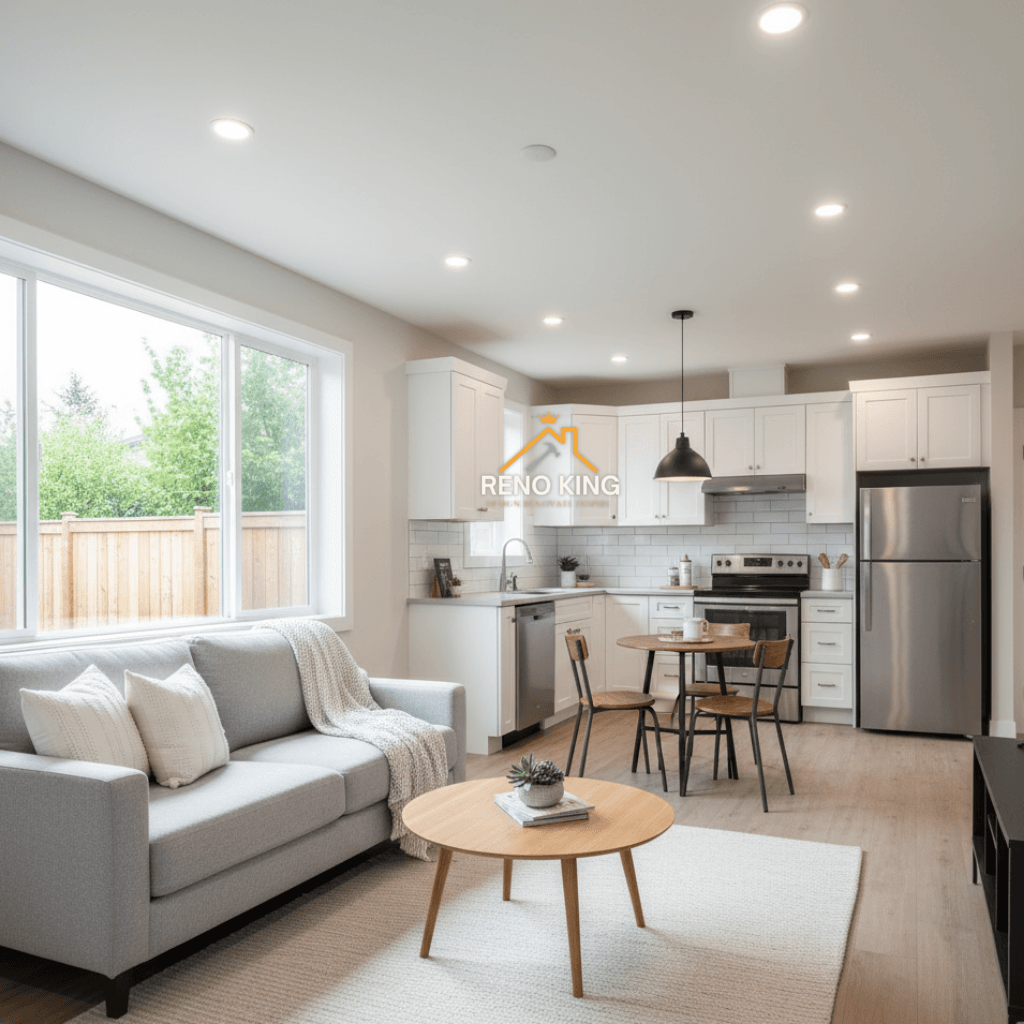
- Luxury Vinyl Plank (LVP): After membrane prep, LVP is the undisputed champion for basement suites. LVP is 100% waterproof, durable against scratches and heavy furniture, and resilient against minor moisture transmission from the slab. Choose a light, neutral wood look to brighten the space.
- Avoiding Risks: Never install carpet (which traps moisture and odours), laminate (which swells when wet), or engineered hardwood (which warps) below grade. These will fail prematurely, costing you time and money during tenant turnover.
B. Lighting and Ceiling Height: Maximizing Space
Basements are naturally low on natural light and often low on ceiling height. The renovation must counteract these factors.
- Recessed LED Pot Lights: Use recessed LED pot lights throughout the suite instead of bulky surface-mounted fixtures or track lighting. This maximizes the perception of head clearance, making the suite feel taller and brighter. Use a 4000K (Cool White) temperature to mimic natural daylight.
- Paint Schemes: Stick to white, off-white, or very light grey paint throughout the entire suite. This reflects the limited natural light from the egress windows, preventing the “cave-like” feeling of a typical basement.
C. Kitchen and Bath Durability
These spaces see the most wear and tear. Durability is a function of material quality and maintenance simplicity.
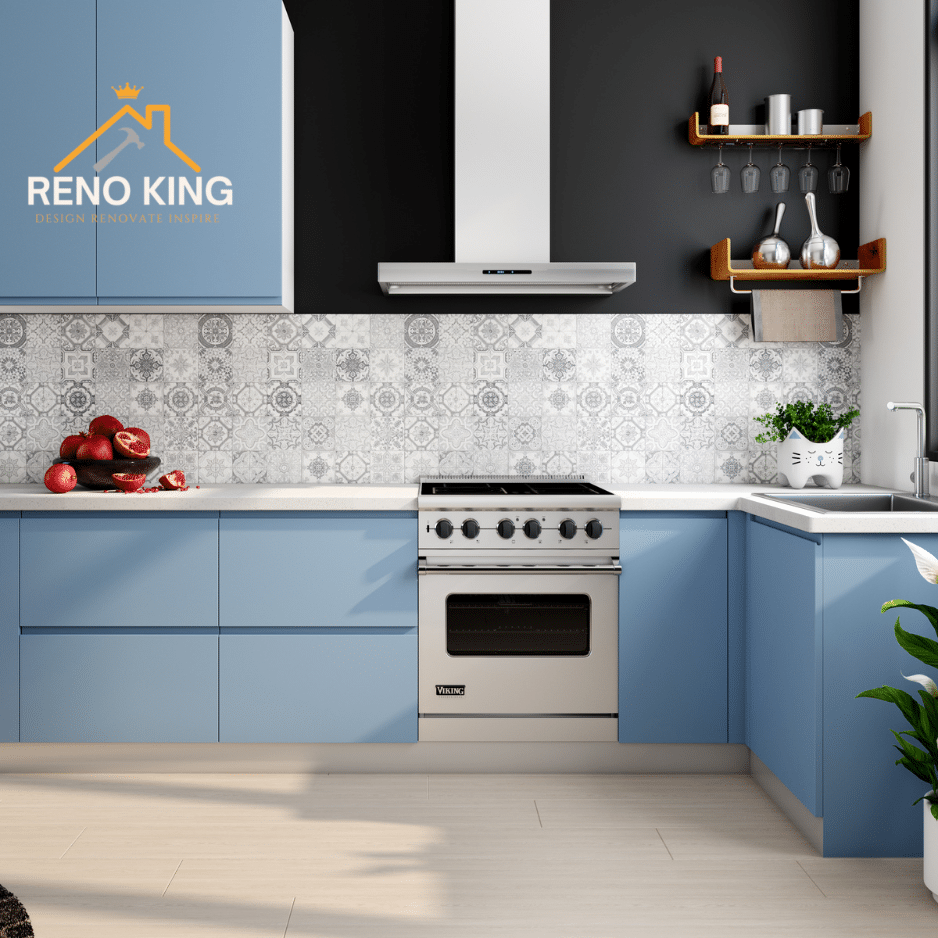
- Moisture-Resistant Cabinetry: Specify cabinets made with plywood boxes, not cheaper particleboard, which will swell and degrade if exposed to moisture or plumbing leaks. Use simple, timeless shaker-style doors.
- Countertops: Install quartz countertops for stain resistance and zero maintenance. Use a neutral colour that will appeal to the widest range of tenants.
- Bathroom Walls: Behind all tile in the bathroom, use cement board or moisture-resistant green board, not standard drywall. This protects the structure against high humidity and leaks from the shower area.
- Full-Sized Laundry: The biggest luxury you can offer a tenant is in-suite laundry. Even a compact stackable unit in a closet (with proper venting and drainage) justifies a significant increase in the monthly rental rate and reduces tenant turnover.
V. Financial and Logistical Considerations Unique to Calgary
Ignoring the local context and potential hidden costs is the fastest way to derail a renovation budget and schedule.
A. Dealing with the Unknown: Asbestos and Wiring
Many of Calgary’s highly desirable neighbourhoods feature homes built in the mid-20th century. These homes carry specific, high-cost risks that must be tested and budgeted for:
- Asbestos Testing: If you are disturbing drywall compound, older vinyl flooring glue, stucco, or duct insulation (common in homes pre-1990), you are legally required to stop work and perform Asbestos testing. If positive, you must hire certified abatement professionals, which can add significant time and tens of thousands of dollars to the cost. Budgeting for the testing phase is mandatory and essential for legal compliance.
- Old Wiring Remediation: If your inspection reveals old Aluminum or Knob-and-Tube wiring, you will likely be mandated to perform a full electrical replacement of all affected circuits to secure a final electrical inspection certificate. This is a non-negotiable safety upgrade and a major financial undertaking.
B. The Permit Timeline, Inspections, and Contractor Selection
Achieving legal status is not a quick process. Setting realistic expectations is key to managing stress and cash flow.
- The City Review Process: The time needed for architectural drawings, City of Calgary plan review, and securing the Development and Building Permits can often stretch to three to six months before demolition even begins. Factor in time for re-submissions if your initial drawings don’t perfectly meet the code.
- Hiring Experience: When selecting a contractor, you must hire someone with verifiable, recent experience in securing City of Calgary legal secondary suite certifications. An inexperienced contractor can miss critical code items, leading to failed inspections that stop the project dead in its tracks. A successful contractor knows the inspectors’ priorities and ensures all fire and structural elements are perfect for rough-in approval.
- The 20% Contingency Rule: Why you must allocate a minimum of 20% of your total estimated renovation cost to unforeseen structural, electrical, or remediation work hidden behind walls. This buffer protects you from disaster when an engineer discovers a failing support beam or an outdated plumbing stack that must be replaced.
C. Appraisal Value and Equity
The ROI of a legal suite is not just measured by monthly cash flow; it’s secured in your home’s equity.
How securing the final City of Calgary Secondary Suite Certification legally solidifies the unit’s value:
- Appraiser Recognition: Banks and appraisers highly recognize a legal, certified suite as a superior, low-risk asset compared to an uncertified unit. This certification provides documented proof of income potential, directly increasing the overall market value and equity of your home.
- Buyer Appeal: When it’s time to sell, a legal suite certification simplifies the transaction, reduces buyer due diligence risk, and appeals to a wider pool of investors and multi-generational families, ensuring a faster sale at a higher price.
VI. Conclusion: De-Risking Your Investment and the Next Step
Renovating a secondary suite in Calgary is perhaps the most powerful home investment you can make, but it is a complex journey fraught with regulatory pitfalls and expensive structural challenges unique to older homes. Your success hinges on prioritizing the three highest-ROI compliance areas: Egress and Life Safety (Structural Cuts), Utility Independence (Sub-Meters/Separation), and Professional Structural Integrity (Fire Separation and Plumbing).
Attempting to navigate the City of Calgary’s demanding permitting process, coordinating engineers and specialized fire-rated trades, and anticipating the hidden costs of remediation (like asbestos or old wiring) without expert guidance is the fastest path to costly delays, failed inspections, and wasted money.
You need a partner who specializes in the nuances of Calgary’s legal suite certification process, a partner who knows exactly where the City inspectors will focus their attention. We help homeowners achieve full compliance, secure their permits, and maximize their rental income safely and effectively.
📞Contact Reno King today to begin a precise, property-specific ROI and feasibility study for your secondary suite renovation, turning your basement liability into a legal, cash-flowing asset.