
Monday, November 03, 2025
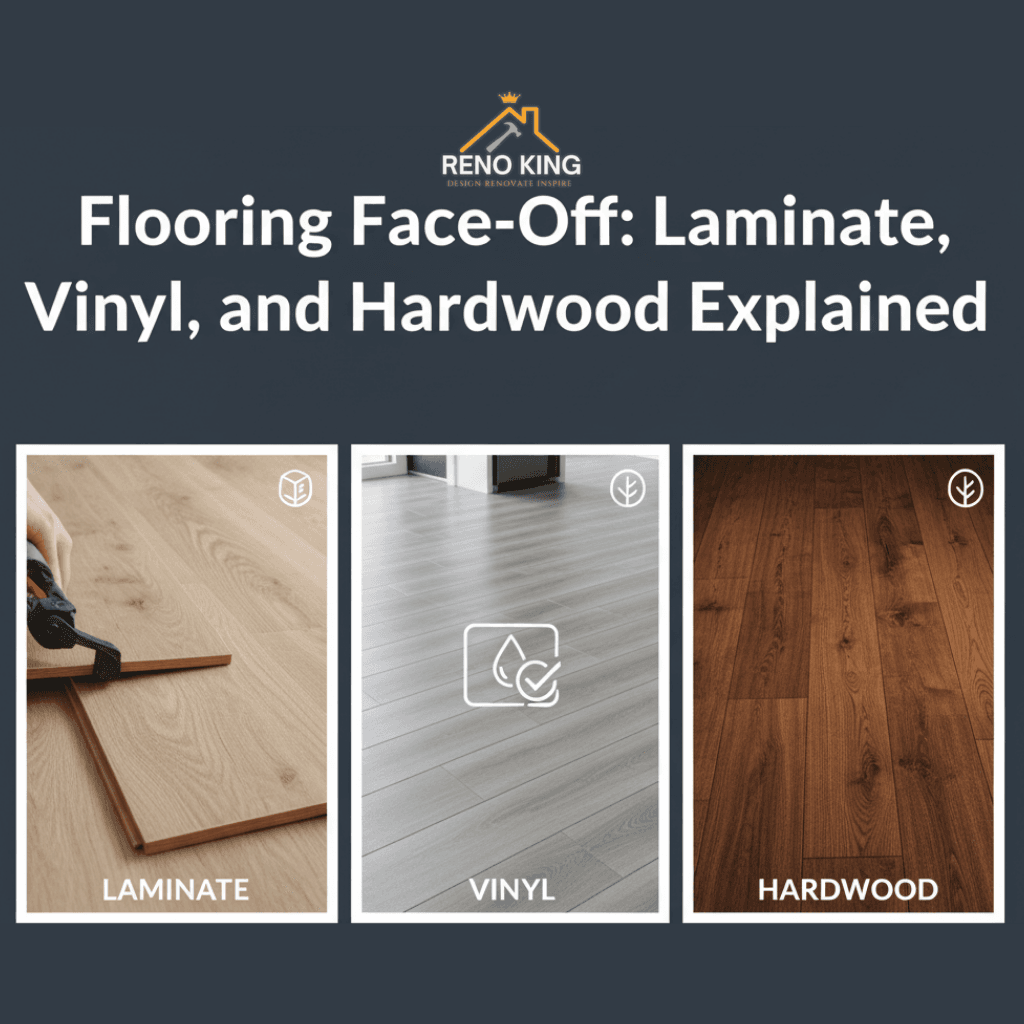
Choosing the right flooring is about more than just picking a color; it’s about making a long-term investment that defines your home’s durability, comfort, maintenance, and ultimate resale value. Walk into any flooring store, and you’ll immediately be confronted with the three biggest contenders: hardwood, laminate, and vinyl.
While they might look similar from a distance, these materials are fundamentally different in composition, resilience, and cost. Getting this decision wrong can lead to premature replacement, moisture damage, or endless maintenance headaches.
This guide, brought to you by the expertise of Reno King, serves as your definitive masterclass. We’ll cut through the marketing jargon and compare these three champions across the four metrics that truly matter: Cost, Durability, Moisture Resistance, and Resale Value. By the time you’re done reading, you’ll know exactly which flooring belongs in your specific room.
The Contenders: Understanding the Fundamentals
Before the face-off begins, it’s crucial to understand what each type of flooring actually is. Their structure dictates their performance and defines their limitations.
1. Hardwood Flooring (The Classic Champion)
Hardwood flooring is the organic, premium choice, milled from natural timber. It is 100% natural material and is broadly divided into two structural categories: solid and engineered.
- Solid Hardwood: This is the traditional standard—a single, thick piece of wood, usually ¾ of an inch thick. Because the wear layer is the entire plank, it can be sanded and refinished many times throughout its lifetime (up to ten times or more), giving it an incredible lifespan, often matching the lifespan of the home itself. Solid hardwood is sensitive to moisture and must be nailed or stapled over a plywood subfloor, never directly over concrete or in a basement.
- Engineered Hardwood: This type features a thin layer of real hardwood (the veneer, which is the surface you see) glued to a stable core, usually made of crisscrossed layers of plywood or HDF. This cross-ply structure makes engineered wood much more dimensionally stable than solid wood; it expands and contracts less in response to temperature and humidity swings. Depending on the thickness of the top veneer (typically 1mm to 6mm), it can only be sanded and refinished a limited number of times, typically between zero and three.
2. Laminate Flooring (The Durable Imposter)
Laminate flooring is a synthetic marvel, expertly designed to mimic the look of wood or stone using high-resolution photography. Its composite structure is key to understanding its strengths and, more importantly, its weaknesses. It is constructed in four layers:
- Wear Layer: This is the transparent, protective top coating made of melamine resin and aluminum oxide. It is the powerhouse of scratch resistance. Consumers must look for the AC Rating (Abrasion Class), which indicates the level of durability (AC3 and AC4 are common for heavy residential use).
- Design Layer: A detailed photograph that gives the laminate its visual identity. This layer dictates the perceived quality—cheaper laminates often have repetitive patterns.
- Core Layer: The thick, main body, typically made of High-Density Fiberboard (HDF). This compressed wood fiber core is what makes laminate affordable but is also its fundamental Achilles’ heel, as HDF is highly susceptible to massive, irreversible swelling and warping when water penetrates the seams.
- Backing Layer: A stabilizing layer that provides structural balance and helps prevent warping.
Laminate is prized for its low cost and high durability against surface scratches, making it a viable option for tight budgets in dry environments.
3. Vinyl Flooring (The Modern, Waterproof Workhorse)
Vinyl flooring is a 100% synthetic, plastic-based material known for its superior moisture resistance and flexibility. Modern vinyl is almost exclusively sold as Luxury Vinyl Plank (LVP) or Luxury Vinyl Tile (LVT).
Modern LVP/LVT utilizes rigid core technology, which significantly enhances its durability and stability over older, softer vinyl. The two most common rigid core types are:
- WPC (Wood Plastic Composite): This core is mixed with foaming agents, making it softer, thicker, and more comfortable underfoot. It offers better insulation and sound absorption.
- SPC (Stone Plastic Composite): This core is made primarily of limestone powder and PVC, making it extremely dense, thin, and rigid. This density provides superior resistance to dents and temperature-related expansion/contraction.
The Wear Layer Thickness (measured in mils, usually 12 to 28 mil for quality products) is the primary indicator of LVP/LVT’s lifespan. Crucially, LVP and LVT are generally 100% waterproof, not just water-resistant, making them the ultimate choice for wet and high-humidity areas.
Metric 1: Cost and Budget – Where Does Your Money Go?
When evaluating the cost of flooring, you must look at the overall financial picture, which includes the material cost, the necessary underlayment, and the installation cost (including labor and tools).
Laminate: The Budget-Friendly Entry Point
| Category | Typical Price Range (per sq. ft.) | DIY Feasibility |
|---|---|---|
| Material | $1.50 – $4.00 | High |
| Installation | $2.00 – $4.00 (Pro) | Easy (Floating Floor) |
Laminate is the undisputed champion of low upfront cost. Its composite core and photographic design layer make it inexpensive to manufacture.
Installation Nuance: The low installation cost is largely due to the click-and-lock floating floor system—the planks simply snap together over the subfloor, requiring no nails or glue. For handy homeowners, laminate flooring is a highly popular and feasible DIY project, which can save hundreds or thousands in professional labor. The biggest installation risk is ensuring the subfloor is perfectly level, as any unevenness will make the floating floor feel spongy or disconnect the joints.
Vinyl (LVP/LVT): The Mid-Range Sweet Spot
| Category | Typical Price Range (per sq. ft.) | DIY Feasibility |
|---|---|---|
| Material | $3.00 – $7.00 | High |
| Installation | $2.50 – $5.00 (Pro) | Medium-High (Floating Floor or Glue) |
Vinyl lives comfortably in the mid-range. The higher price compared to laminate reflects the better core composition (WPC or SPC) and the enhanced water resistance and dent protection.
Installation Nuance: LVP often comes as click-and-lock floating planks, but high-end LVT (tiles) may require a glue-down installation, which is more time-consuming and labor-intensive but results in an even more stable, seamless, and permanent floor. You are paying slightly more for waterproof assurance and superior durability, which prevents costly water damage replacements down the road, offering great value for money.
Hardwood: The Premium Investment
| Category | Typical Price Range (per sq. ft.) | DIY Feasibility |
|---|---|---|
| Material | $5.00 – $15.00+ | Low (Complex) |
| Installation | $6.00 – $12.00+ (Pro) | Very Low (Requires Expertise) |
Hardwood flooring is the premium choice. Costs vary dramatically based on the species (e.g., domestic oak is cheaper than exotic Brazilian cherry) and whether it is pre-finished (more expensive but less labor later) or unfinished (cheaper material, but requires expensive sanding/finishing on site).
Why Installation is Expensive: Solid hardwood installation is a specialist job. It requires precision nailing/stapling or gluing, moisture testing, and a specific acclimation period in the home before installation. The high labor cost reflects the expertise needed to handle an organic material that will inevitably expand and contract over time. An improperly installed hardwood floor can warp or cup quickly.
Hidden Costs for Hardwood: Beyond the material and labor, you must budget for subfloor prep (hardwood demands a perfectly flat, dry subfloor) and the inevitable refinishing every 7–10 years—a significant expense that, while necessary, is the price of maintaining its century-long lifespan.
Metric 2: Durability and Wear – How Will It Handle Daily Life?
Durability is a key metric, especially in homes with active children, large pets, or high foot traffic. It determines how long your floor will look new before needing replacement or restoration.
Hardwood: Dents Easily, Lasts Forever
Hardwood, being natural wood, is vulnerable to two main forms of damage: denting (from dropped objects) and scratching (from dirt, pet claws, and furniture).
- Janka Hardness Scale: Consumers should refer to the Janka scale, which measures the force required to embed a steel ball halfway into the wood. Denser species like Maple or Hickory (higher Janka rating) resist dents better than softer woods like Cherry or Pine.
- The Lifespan Trade-Off: While hardwood is easily damaged, its ability to be sanded and refinished multiple times is its defining strength. A major scratch or dent is not permanent; it’s just wear that can be fully sanded away. This process essentially resets the clock, allowing the floor to last for generations. The finish applied (polyurethane, oil-based, etc.) is what truly provides the initial scratch protection.
Laminate: Excellent Scratch Resistance, Zero Dent Resistance
Laminate’s protective clear wear layer (the AC rating system) makes it exceptionally resistant to surface scratches and scuffs—often outperforming standard hardwood finishes in this regard.
- AC Rating Explained: The AC rating is a critical factor: AC3 is ideal for general residential use, while AC4 is often recommended for busy homes or light commercial spaces. Don’t buy lower than AC3 for your main living areas.
- The Denting Problem: The HDF core is relatively soft, meaning a sharp impact or heavy point load (like a piano leg) can crush the core underneath the design layer. Because the protective and design layers cannot be fixed or refinished, this dent cannot be sanded out, rendering the plank permanently damaged and requiring plank replacement.
Vinyl (LVP/LVT): The Balanced Performer
Modern luxury vinyl flooring (especially SPC core products) offers a robust balance: high resistance to surface scratches and good resistance to impact dents.
- Wear Layer is Key: Vinyl durability is measured by the thickness of its wear layer (12 mil, 20 mil, 28 mil, etc.). For heavy residential use, experts recommend at least 20 mil.
- Dent Resistance: The rigid, dense SPC core resists heavy indentations from furniture or dropped items much better than the softer HDF in laminate. The flexible WPC core, while comfortable, is slightly more susceptible to dents.
- Plank Replacement: Like laminate, LVP/LVT cannot be refinished. However, its modular construction means that if a plank is damaged, it can be unlocked and replaced, a task that is often easier than trying to repair a damaged section of hardwood.
Metric 3: Moisture, Water, and Environment – The Basement and Bathroom Test
Moisture is the single biggest determinant of flooring failure. This metric is crucial for determining suitability in kitchens, bathrooms, laundry rooms, and basements.
Laminate: The Water Hazard
Laminate is highly water-resistant to small surface spills wiped up quickly, but it is fundamentally not waterproof.
- The HDF Problem: The HDF core absorbs liquid quickly if it penetrates the seams between the planks. Once the core swells, it is irreversible—the plank buckles, the locking mechanism breaks, and the floor is ruined in that area.
- Bevels and Seams: Laminate planks with beveled (sloped) edges are slightly more vulnerable to moisture penetration than square-edged planks because the joint is more exposed.
- The Verdict: Avoid laminate in high-moisture areas or where unexpected flooding is possible. It is best reserved for dry areas like bedrooms, living rooms, and second-floor offices.
Hardwood: The Humidity Challenge
Hardwood is sensitive to both liquid spills and atmospheric humidity.
- Liquid Spills: Even brief contact with standing water will damage the wood fibers, leading to staining, cupping (edges rise), or crowning (center rises). Immediate, careful cleanup is mandatory.
- Atmospheric Control: Wood constantly absorbs and releases moisture in an attempt to equalize with its environment. This expansion (high humidity) and contraction (low humidity) creates seasonal gaps between planks. Hardwood requires a home environment with stable climate control, ideally maintaining humidity between 30% and 50%.
- The Verdict: Hardwood is not recommended for full bathrooms or basements (even sealed ones), as the risk of catastrophic failure from moisture is too high. Engineered hardwood handles humidity fluctuations better than solid hardwood, making it a safer choice for ground-level rooms or installation over concrete.
Vinyl (LVP/LVT): The Waterproof King
This is where modern vinyl flooring dominates the competition and provides unmatched peace of mind.
- 100% Waterproof Core: The plastic or stone composite core will not absorb water, swell, or rot, even if submerged. Water can penetrate beneath the floor, but it will not damage the plank itself.
- Perfect for Problem Areas: Luxury vinyl plank is the top choice for basements, full bathrooms, and high-spill kitchens.
- Radiant Heat Compatibility: LVP, particularly the SPC rigid core varieties, handles temperature swings extremely well and is often approved for installation over radiant in-floor heating systems, which can be problematic for both laminate and solid hardwood.
- Installation Advantage: Its stability and moisture resistance mean it can be installed directly over existing hard-surface floors (provided they are level) or over concrete slabs without the need for extensive subfloor preparation or acclimatization.
Metric 4: Aesthetics, Feel, and Resale Value – The Long-Term Investment
Flooring is a key visual component of the home’s design and dictates its long-term financial performance when selling.
Hardwood: The Gold Standard for Resale Value
No other flooring material carries the same weight, prestige, and high perceived value as real hardwood flooring.
- Aesthetics and Authenticity: The genuine variation in grain, natural warmth, and underfoot feel is unmatched. Its natural aging process is often viewed as a positive feature, adding character.
- Resale Value: Hardwood is consistently cited by real estate agents as a top feature that attracts discerning buyers and commands the highest selling price. Buyers see hardwood as a permanent, high-end fixture that requires minimal long-term investment beyond refinishing.
- Underfoot Feel: It feels solid, substantial, and naturally warm (unlike stone or ceramic tile), offering the best acoustic experience when properly installed.
Vinyl (LVP/LVT): The Realism Revolution
Luxury vinyl flooring has undergone a revolution in visual quality, closing the authenticity gap significantly in the mid-range market.
- Visual Realism (EIR): Modern LVP uses Embossed-in-Register (EIR) technology, where the texture layer aligns perfectly with the photograph of the wood grain. This means you can see and feel the knots and saw marks, making it look incredibly realistic, even from a close distance.
- The Feel: Vinyl is warmer than tile but often has a “harder” or more synthetic feel than true wood, though WPC cores offer a softer, more comfortable walk than the denser SPC cores.
- Resale Value: LVP is highly valued for its practicality and durability. While it may not increase the appraised value of a home in the same way solid hardwood does, it is an excellent, modern amenity that will certainly not deter buyers, especially in crucial areas like kitchens and bathrooms.
Laminate: Good Look, Hollow Sound
Laminate offers a great visual imitation of wood, but it often falls short in the tactile and auditory experience, particularly in cheaper products.
- The Look: High-resolution printing means the design layer can look fantastic. However, look closely at the pattern repetition, especially in wide-plank formats, which can quickly reveal its synthetic nature.
- The Feel and Sound: Because laminate is a thin plank installed as a floating floor, it commonly suffers from a hollow, echoey sound or a “click-clack” noise when walked on, which detracts significantly from its high-end feel. Using a high-density, thick underlayment is essential to mitigate this.
- Resale Value: Laminate is generally viewed as an adequate, cost-effective finish. While it is certainly preferable to outdated carpet, it does not offer the same competitive edge as hardwood or the waterproof assurance of LVP, which is what buyers are increasingly looking for.
The King’s Final Verdict: Choosing Your Champion
There is no single “best” flooring. The ideal choice depends entirely on the room application, your budget, and your tolerance for maintenance. Use these scenario breakdowns to make your final decision.
Scenario 1: The High-Traffic, High-Moisture Zone (Kitchen, Basement, Bathroom, Mudroom)
| Decision | Material | Rationale |
|---|---|---|
| Winner | Luxury Vinyl Plank (LVP) | 100% Waterproof and dimensionally stable. It can handle spills, humidity, and heavy cleaning without swelling or warping. The rigid core (SPC/WPC) ensures longevity. |
| Avoid | Hardwood and Laminate | Both are susceptible to permanent damage from water ingress, making them a costly mistake in these environments. |
Scenario 2: The Main Living Areas with High Resale Priority (Living Room, Dining Room, Hallways)
| Decision | Material | Rationale |
|---|---|---|
| Winner | Hardwood (Engineered or Solid) | Unbeatable resale value. If you can manage the higher upfront cost and maintenance, it is the classic choice that lasts a lifetime. It offers the best acoustic and authentic tactile experience. |
| Second Best | High-End LVP | If your budget doesn’t allow for hardwood or you have very large, active dogs that would heavily scratch a hardwood finish, a premium LVP with a thick wear layer is the most practical, worry-free alternative. |
Scenario 3: The Budget-Conscious, Low-Traffic Area (Spare Bedroom, Home Office, Den)
| Decision | Material | Rationale |
|---|---|---|
| Winner | Laminate Flooring | The most cost-effective solution. In a dry room with minimal traffic, laminate provides an excellent visual aesthetic at the lowest price point, allowing you to allocate budget toward higher-impact areas like the kitchen. |
| Alternative | Entry-Level LVP | If you have any concerns about minor spills or want the absolute peace of mind of a waterproof product, even in a bedroom, slightly more expensive entry-level LVP is a worthy upgrade that eliminates swelling risk. |
Summary of Strengths and Weaknesses
| Feature | Hardwood | Laminate | Vinyl (LVP/LVT) |
|---|---|---|---|
| Composition | 100% Natural Wood | Synthetic HDF Core/Photo Layer | 100% Synthetic Plastic/Stone Core |
| Moisture Resistance | Poor (Sensitive to spills and humidity) | Poor (Water will swell the HDF core) | Excellent (100% waterproof) |
| Scratch Resistance | Fair (Easily scratched, but refinishable) | Good (High AC rating resists surface scratches) | Very Good (Thick wear layer protects well) |
| Dent Resistance | Fair (Dents easily, but can be sanded out) | Poor (HDF core crushes easily) | Good (Especially with an SPC rigid core) |
| Resale Value | Highest (Gold Standard) | Average (Cost-effective finish) | High (Modern, practical, and durable) |
| Maintenance | Regular vacuuming, occasional professional sanding/refinishing. | Simple sweeping, wet mopping is risky. Cannot be refinished. | Simple sweeping and mopping. No refinishing needed. |
| Lifespan | 75–100+ years | 15–25 years | 25–40 years |
From Face-Off to Finished Floor: Your Next Step with Reno King
Making the final decision on flooring is a huge step, but the real challenge—and where quality makes or breaks the project—is the installation. Poor installation, regardless of the material, can ruin your investment by leaving gaps, causing structural instability, or voiding your warranty.
Whether you choose the timeless elegance of hardwood flooring, the budget-friendly durability of laminate flooring, or the waterproof resilience of luxury vinyl plank (LVP), the precision of the subfloor preparation and the installation process are paramount to achieving a long-lasting, flawless finish. We understand that even a high-quality product is only as good as the foundation it rests upon.
At Reno King, we don’t just know the differences between these floors; we specialize in installing them correctly. This means performing advanced moisture testing before laying any product, ensuring precise cuts and transitions for a seamless look, and utilizing the right subfloor preparation techniques for each material—from the demanding flatness required for rigid core vinyl to the exact nailing schedule for solid hardwood.
We move beyond general advice to provide you with tailored material recommendations, detailed project budgeting, and professional installation that guarantees your floor looks exactly like the vision you planned. Ready to transition from researching the options to walking on your dream floor?
Reach out to Reno King today to schedule a consultation and let us ensure your next flooring project is a success, from subfloor to surface.