
Monday, October 13, 2025
The concept of the Carriage House, or Accessory Dwelling Unit (ADU), has moved from a quaint dream to a fundamental piece of Calgary’s urban planning and real estate investment strategy. Driven by the city’s high demand for accessible rental properties, the tight housing market, and the growing need for flexible, multi-generational living arrangements, converting an existing detached garage or accessory building into a functioning suite is a renovation trend that delivers exceptional Return on Investment (ROI). These units not only provide a crucial secondary income stream but also significantly enhance the overall value and flexibility of the primary property.
However, renovating an old garage or detached structure into a high-quality, legal ADU is significantly different from building one from scratch. You aren’t just building; you’re adapting, correcting, and often overcoming the foundational limitations of an older building that was never intended for residential use. This complexity introduces unique and costly risks. Your renovation dollars must be spent strategically to address safety and compliance first, before any aesthetic finishes. Failing to budget for these mandatory structural and regulatory fixes is the single biggest cause of budget overruns in ADU conversions—a mistake that can jeopardize your entire financial return.
This comprehensive guide focuses on the key renovation areas that transform a simple structure into a revenue-generating asset, detailing precisely where you must invest to secure legal compliance, maximize rental income, and ensure long-term property value in Calgary. We will define success not just by the final look, but by securing the best balance between property resale value and maximizing premium, consistent rental income (yield).
I. Interior Upgrades for Maximum Rental ROI: The Tenant’s Perspective
A high-quality tenant will pay a premium for comfort, durability, and style. The interior renovations are the engine of your rental yield, and every choice must balance modern appeal with rock-solid, low-maintenance longevity. When designing these compact spaces, prioritize vertical storage, multifunctional furniture areas, and bright, neutral aesthetics to combat the feeling of confinement.
A. Kitchen Efficiency and Durability: The Rental Engine
In a compact ADU, the kitchen is the highest-value space. It must look contemporary, be highly functional, and be able to withstand heavy use from tenants over many years. Skimping on materials here results in high turnover costs and ongoing maintenance expenses later.
Focus on Compact Design and Functionality
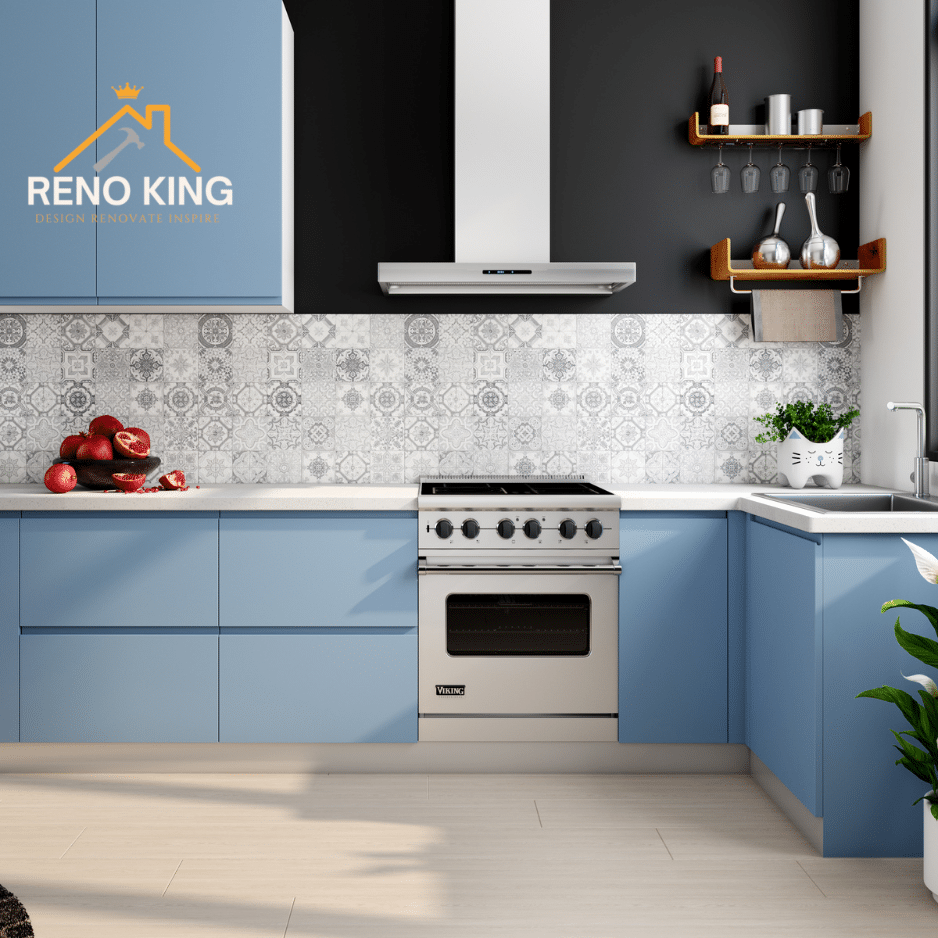
The challenge in an ADU kitchen is making a small space feel expansive and practical. This is where strategic design adds immense value. Instead of standard base cabinets, install deep drawers for easier access and better storage. Utilize vertical space with cabinets that extend to the ceiling. Consider pull-out pantries and smart corner solutions rather than traditional, hard-to-access cupboards. A well-designed 8-foot ADU kitchen can feel more usable than a poorly laid out 12-foot kitchen in a main home because of smart planning. Furthermore, specify plywood construction cabinets over cheaper particleboard, which swell and fail if exposed to moisture—a common risk in rental units. This small upgrade in cabinet quality offers decades of durability.
Appliance Strategy: Size Matters for Rentability and Air Quality
Do not automatically default to the smallest “apartment-sized” appliances. While a 24-inch fridge and stove save space, they often signal a lower-quality unit, restricting your tenant pool and resulting in a lower rental rate. For most high-quality Calgary ADUs, a 30-inch range (if space permits) and a standard 30-inch refrigerator are preferred, as these cater to couples or individuals who cook regularly. The exception is the dishwasher: a smaller 18-inch model is almost always sufficient and is a necessary space-saver.
A high-ROI addition is a stacked or all-in-one washer/dryer combination unit. While a dedicated laundry room may be impossible, providing in-suite laundry dramatically increases rent appeal and the rate you can charge. Place the unit strategically within the kitchen or closet space with proper drainage and exhaust. Crucially, the kitchen range hood must be ducted directly to the exterior; recirculating hoods are inadequate for removing cooking grease and moisture, leading to premature deterioration of paint and cabinetry.
Durable Materials: Minimizing Maintenance
For countertops, quartz is the undisputed champion of rental properties. It is non-porous (unlike granite), highly stain-resistant, and durable, minimizing the risk of damage that leads to costly repairs between tenants. Specify a small, practical overhang (1-inch max) on the countertop edge to help protect the cabinet doors below from spills. For flooring, continuous Luxury Vinyl Plank (LVP) laid throughout the entire unit (kitchen, living area, and bedroom) is mandatory. LVP is 100% waterproof, incredibly tough, and provides a visually seamless flow that makes the entire ADU feel larger and cleaner. These durable finishes are essential protection for your investment and reduce turnover costs.
B. Bathroom Modernization for Tenant Appeal and Protection
The ADU bathroom must be modern, brightly lit, and perfectly ventilated to prevent moisture issues, which are the leading cause of mould and structural damage in compact rental units.
Water Efficiency and Plumbing Quality
A critical renovation is the installation of water-saving fixtures. Upgrading to low-flow toilets (4.8L or less) and high-efficiency showerheads not only meets environmental standards but directly lowers your monthly utility consumption. If you, as the landlord, are covering the water bill, this is a tangible ROI boost that pays dividends every month. Focus on commercial-grade plumbing fixtures that are easy to maintain and replace. Additionally, ensure the plumbing includes accessible shut-off valves for the sink and toilet, allowing for easy maintenance without disrupting the entire ADU’s water supply.
Shower System and Waterproofing
For the shower, carefully weigh the cost of a custom tiled shower versus a high-quality pre-fabricated acrylic surround. While tiling looks superior, it is only as good as the waterproofing underneath. If you opt for tile, a proper waterproofing membrane system (like the Schluter system) is a non-negotiable structural renovation. Cutting corners on shower waterproofing is a guaranteed long-term failure that can lead to rot in the floor joists below—a devastating and costly repair.
Crucial Ventilation Renovation
The highest-ROI structural protection item in the bathroom is the exhaust fan. You must install a powerful fan with a high CFM (Cubic Feet per Minute) rating that is ducted properly and straight to the exterior. Adding a timer switch to the fan is a simple but vital upgrade that ensures tenants run it long enough to fully evacuate moisture after a shower, preventing humidity buildup that leads to paint bubbling, wood damage, and, eventually, mould. This single item is paramount for protecting your renovation and avoiding expensive structural repairs down the road.
C. Soundproofing and Privacy: Maximizing Retention
The primary complaint in any attached or separated living situation is noise, whether from the main house, the attached garage, or mechanical systems. Investing in sound control is an invisible renovation that directly translates to tenant satisfaction, higher retention rates, and premium rent.
In a converted garage, the unit is often located above a working garage or adjacent to the main home. You must upgrade the separation. This involves installing a layer of dense acoustic insulation (e.g., mineral wool, which is more effective than standard fiberglass) between the ceiling joists. Crucially, this must be followed by resilient channel (RC channel), a thin metal strip that physically decouples the drywall from the joists. Finally, two layers of 5/8-inch fire-rated drywall are installed. This combination effectively isolates the structure and dramatically reduces sound transmission, making the suite feel private and quiet. A further advanced technique involves wrapping the main vertical waste plumbing stacks with acoustic material to silence the intrusive sound of flushing.
II. Mandatory & Hidden Regulatory Upgrades: Securing Compliance and Safety
These renovations are the backbone of your ADU’s value. Without legal compliance and safety assurance, the entire unit is a major liability that can lead to fines, forced closure, insurance issues, or the collapse of a future home sale. In Calgary, certification as a Secondary Suite is the ultimate goal for legal, high-value ADUs.
A. Legal Suite Certification: The Permit Renovation and Fire Code
Bringing the unit up to City of Calgary Secondary Suite standards is the single most important and complex phase of the renovation. It requires adherence to strict building codes that address life safety and is overseen by the Planning & Development department.
- Fire Separation: This is non-negotiable and requires engineering. The floor, walls, and ceiling separating the ADU (the suite) from the main structure (often a garage or the primary residence) must provide a specific fire resistance rating. This typically involves using two layers of 5/8-inch Type X (fire-rated) drywall and ensuring all electrical boxes, pipes, and ducts that penetrate the fire separation are carefully sealed with fire-rated caulk or putty pads to prevent the spread of smoke and flame. The integrity of this separation is key.
- Hardwired Alarms: The ADU must have interconnected, hardwired smoke and carbon monoxide (CO) alarms. These alarms must communicate with and trigger the alarms in the main house, ensuring all residents are alerted in an emergency regardless of where the danger originates. Battery-operated alarms are unacceptable for a legal suite.
- Egress Requirements: Every bedroom and the primary living area in the ADU must have a window that meets minimum egress size and height requirements as per the Alberta Building Code. This is a life safety issue that ensures escape in a fire. The window must open wide enough and be close enough to the floor to allow a person to escape. In older garage conversions, this often means cutting a larger rough opening and installing a new, larger window, which is a structural renovation requiring an inspection and engineered lintel support.
The Hidden Cost of Asbestos Risk: In older Calgary garages (pre-1990), there is a significant risk of finding asbestos in materials like drywall joint compound, old flooring adhesives, or stucco finish. If any demolition is performed, and these materials are disturbed, you are legally required to stop work, perform testing, and if positive, hire certified abatement professionals. Budgeting for mandatory asbestos testing early on can save massive financial and schedule disruptions later.
The Value Impact: A legal, certified secondary suite adds significantly more documented and insurable value and greatly simplifies the resale process compared to an illegal unit. Buyers are willing to pay a substantial premium for certified income properties, guaranteeing the money spent on compliance is recouped.
B. Utility and Service Separation: Financial Independence
One of the biggest drags on ROI is paying for a tenant’s utilities, especially if they are running inefficient heaters or ignoring conservation. Renovating the utility infrastructure to allow for independent metering and billing is essential for maximizing net income.
Dedicated Electrical Service and Sub-Metering
You must install a separate, dedicated electrical sub-panel for the ADU. The ideal financial scenario is to work with the municipal utility to install separate electrical and gas meters. This allows the tenant to pay their own bills directly. If full utility separation isn’t feasible (due to cost or infrastructure limitations), at a minimum, all ADU electrical circuits must run to a dedicated sub-panel, making it easy to track the ADU’s consumption via sub-metering devices or proportional estimation, which is far fairer to the landlord.
Heating System Independence
Relying on the main house’s furnace to heat a converted garage is grossly inefficient and almost guarantees disputes over temperature control and cost sharing. The highest-ROI heating renovation is the installation of an efficient ductless mini-split heat pump system. These units provide highly efficient heating (even in Calgary’s cold winters) and crucial air conditioning (a huge selling point in Calgary summers), offering tenants complete, independent control and allowing you to track or bill their energy consumption accurately. Mini-splits are a sophisticated renovation that immediately signals a high-quality unit.
Plumbing Requirements: Backflow Prevention
A critical, often-overlooked plumbing renovation is the installation of a backflow prevention device on the water line feeding the ADU. This is a mandatory requirement by the City of Calgary to prevent contaminated water from flowing back into the municipal system. This small installation is necessary for compliance and protects public health.
C. Structural Integrity and Insulation Standards
Because a converted garage was not originally designed for habitation, you must often perform structural and envelope renovations to meet modern residential codes and climate demands.
- Foundation Check and Remediation: On older detached garages, the foundation may be shallow, uninsulated, or simply a floating concrete slab. A structural engineer’s assessment is vital. If the foundation needs shoring, waterproofing, or structural reinforcement, this must happen first. Adding interior rigid foam insulation (like polyiso or XPS) to the concrete slab or walls dramatically improves energy efficiency and prevents moisture condensation on the cold slab, a common cause of mildew.
- Wall Framing and R-Value: Old garage walls often lack the depth or studs needed to meet residential insulation standards (R-value). This may require adding “furring strips” or a new interior wall frame to increase wall depth, allowing for thicker insulation (usually R-20 or R-22 batts) to meet the City’s energy code for living spaces. Targeting R-20 for walls and R-40 to R-50 for the ceiling is the standard for high-efficiency in Calgary’s climate. This renovation is critical for tenant comfort, low heating bills, and sound dampening.
III. Exterior Upgrades and Asset Protection
The exterior renovation points that protect the structure, maximize curb appeal, and minimize long-term maintenance costs. The exterior is the protective shield against Calgary’s intense weather cycles (hot summers, dry cold winters).
A. Roofing and Water Management
The roof of an older garage is often near the end of its lifespan and must be addressed. Investing in a full replacement of the roofing shingles and underlying membrane is vital for asset protection. Simultaneously, scrutinize the eaves troughs and downspouts. Ensure they are correctly sized and that the downspouts direct water at least six feet away from the foundation of the ADU, preventing costly basement leaks or foundation movement associated with Calgary’s expansive clay soil.
Mandatory Negative Grading: More advanced water management involves ensuring the surrounding grade slopes away from the ADU. The City requires a specific minimum slope to ensure proper drainage. If the grade is flat or slopes inward, this structural issue must be addressed with landscaping or by installing a sub-surface weeping tile system to drain water away, protecting the ADU’s foundation long-term. This renovation is crucial for avoiding water damage claims.
B. Creating a Private Entrance and Curb Appeal
Tenants value privacy and independence. Renovating the exterior to create a distinct, well-lit, and private entrance for the ADU is a key value driver, contributing to higher rental rates. This includes:
- Dedicated Pathway: Creating a clearly defined, durable pathway (concrete, paved stone, or composite decking) that does not require the tenant to walk through the main home’s yard or directly in front of the main house windows. The pathway must also be non-slip and safe for winter conditions.
- Security and Lighting: Installing high-quality, modern exterior lighting (LED, on motion sensors) at the entrance and along the pathway. This adds safety, street appeal, and is required for fire safety in many cases.
- Small Outdoor Space: If possible, renovating to include a small, dedicated outdoor patio space or a small deck/balcony (if the ADU is above-grade) is a huge rental draw. This space does not need to be large, but its presence signals a commitment to quality living and commands a higher rent.
C. Protecting the Envelope: Siding and Windows
In a converted structure, the exterior envelope (siding, windows, doors) may be poor quality.
- Siding Upgrade: Replacing old, cracked vinyl siding with durable, high-quality material like Hardie board (cement fibre siding) or new, heavy-gauge vinyl is recommended. This provides superior weather protection and dramatically improves the unit’s exterior aesthetic, ensuring the ADU’s style complements (or at least doesn’t clash with) the main residence, which is important for overall property value.
- Window Quality: Replacing old, single-pane windows with modern, triple-pane, low-E, argon-filled windows is essential for meeting energy codes, soundproofing, and maintaining temperature regulation against Calgary’s severe cold. Ensure new windows are installed using best-practice flashing techniques (such as building wrap and proper sill tape) to prevent air and water ingress.
IV. The Renovation Journey: Phases and Financial Milestones
Understanding the flow of the renovation is as important as the budget itself. A successful ADU conversion is a staged project with critical inspection milestones that you must pass before moving forward.
Phase 1: Assessment and Regulatory Preparation (The Blueprint Phase)
This phase determines feasibility and is where the critical money is spent on professional advice. It must be completed before any demolition begins, as the findings here dictate the entire project scope and budget.
- Feasibility Study & Engineering: Hire a professional architect or certified ADU builder who can perform a structural assessment of the existing garage. They will use a real property report (RPR) and potentially a new survey to ensure the structure meets current setback requirements. An engineer’s sign-off on structural plans (foundation, new openings, roof load) is often required by the city.
- Architectural Drawings: Creation of detailed, stamped drawings that show the layout, structural changes, and energy efficiency upgrades required to meet the Secondary Suite standards. These drawings form the legal basis for your permits.
- Permit Application: Submission of the drawings to the City of Calgary for the Development Permit (land use approval) and the Building Permit (construction approval). This regulatory process can be lengthy (often several months) and is a major financial and time milestone that dictates your start date.
Phase 2: Structural and Mechanical (The Costliest Phase)
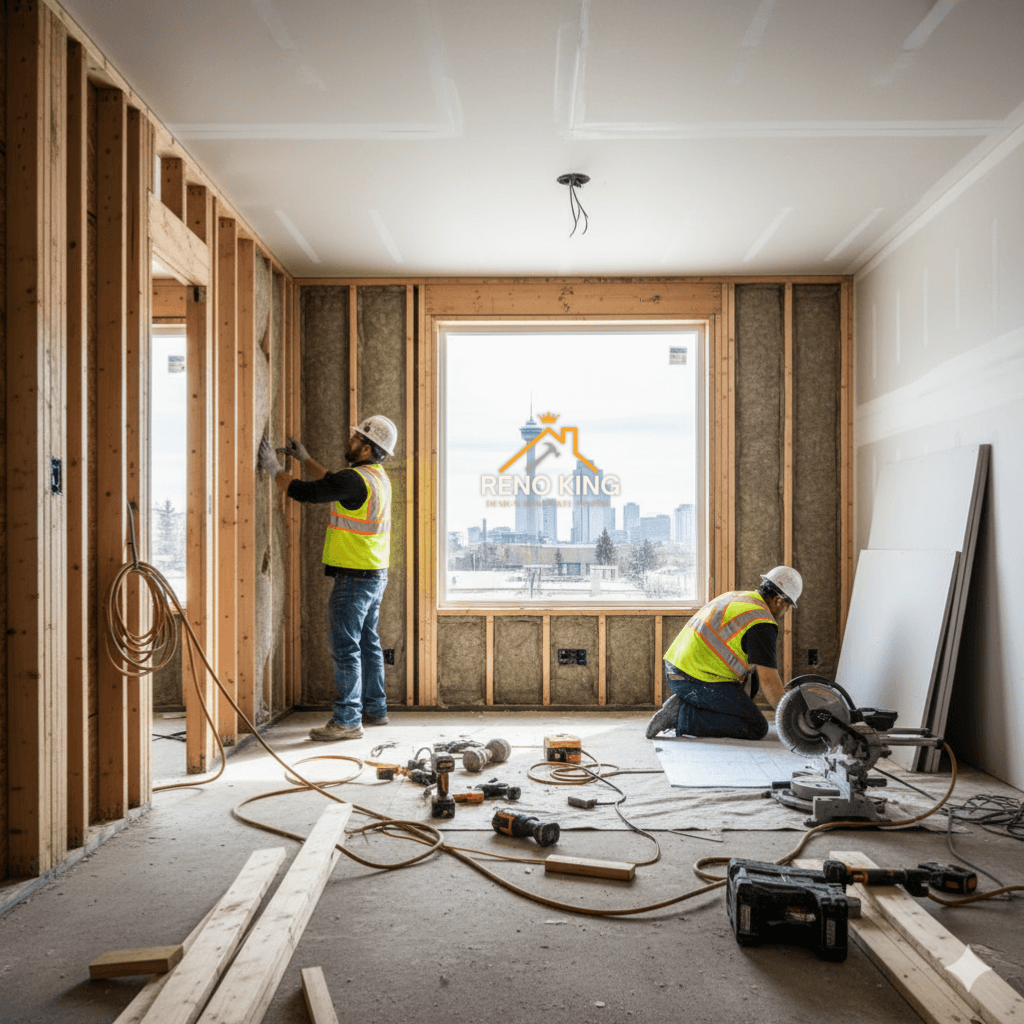
This phase involves the heavy, messy, and most expensive work. It’s where your contingency fund is most vulnerable, as you expose the old structure.
- Demolition and Remediation: Demolishing non-compliant interiors. This is when hidden risks (asbestos in old joint compound, lead paint, old wiring, hidden plumbing) are discovered and must be remediated before moving forward. Maintain a 20% minimum contingency fund on top of your estimate for this phase alone; unexpected discoveries can easily inflate costs by thousands.
- Rough-Ins and Inspections: Installing new electrical, plumbing (water/drainage lines), gas lines, and HVAC components (mini-split units). The City of Calgary requires separate rough-in inspections (electrical, plumbing, gas, structural) before the walls can be closed up. Failing an inspection here leads to costly delays.
- Insulation and Drywall: Insulating the walls and ceiling to meet R-value codes, followed by the installation of the fire-rated drywall, completing the crucial fire separation.
Phase 3: Finishing and Final Compliance (The Aesthetic Phase)
This phase is the most satisfying, as the space finally looks like a home and you can see your investment taking shape.
- Cabinets and Countertops: Installation of the kitchen and bathroom millwork, followed by the seamless quartz countertops.
- Flooring and Tile: Laying LVP flooring, tiling the bathroom and kitchen backsplash. These are quick installations but provide massive visual impact.
- Fixtures and Paint: Installing plumbing fixtures, electrical switches, lighting, and final paint coats.
- Final Inspections: The ultimate financial milestone. A final inspection by the City of Calgary ensures all electrical, plumbing, structural, and fire code requirements have been met, granting the official Secondary Suite Certification. This certificate is the proof of value for any future sale and the key to legal rental income.
V. Conclusion: Maximizing the Value of Your ADU Renovation
Converting or renovating a carriage house in Calgary is one of the most reliable strategies for increasing property value and securing a stable passive income stream. The key is to shift your mindset from “DIY project” to “legal commercial investment.”
If you prioritize the three non-negotiable renovation areas—Compliance and Safety (Fire Separation and Egress), Utility Separation and Heating Efficiency (Mini-Split), and Interior Durability (Quartz and LVP)—you are setting yourself up for maximum ROI. The money spent on permits, engineering, and quality structural work is not an expense; it is a shield against future liability and a guarantee of premium rent. Conversely, prioritizing cheap finishes over legal compliance is a direct path to financial risk and lost income.
If you are currently evaluating an existing garage for renovation, or if you have a non-conforming suite that needs to be brought up to legal standards, navigating the City of Calgary’s strict codes, coordinating specialized trades, and managing the detailed budget necessary for this type of complex conversion can be overwhelming.
You need a partner who understands the unique regulatory landscape of Calgary ADUs and can provide a precise, dual-path cost analysis—one for the necessary compliance renovations, and one for the aesthetic upgrades. We help homeowners manage their renovation journey from initial feasibility assessment to final suite certification.
📞Contact Reno King today to begin a precise, property-specific ROI and feasibility study for your Carriage House conversion.